On March 18–19, 2026, the AUTOSAR China Day, a highly anticipated event in the global automotive software industry, was grandly held in Shanghai. Centered around the core theme of “Ecosystem Restructuring and Collaborative Innovation under Software-Defined Vehicles,” the conference brought together global automakers, major parts suppliers, chip companies, and foundational software service providers to explore how to build a more open, efficient, and secure software ecosystem against the backdrop of accelerating transformation in the automotive industry.
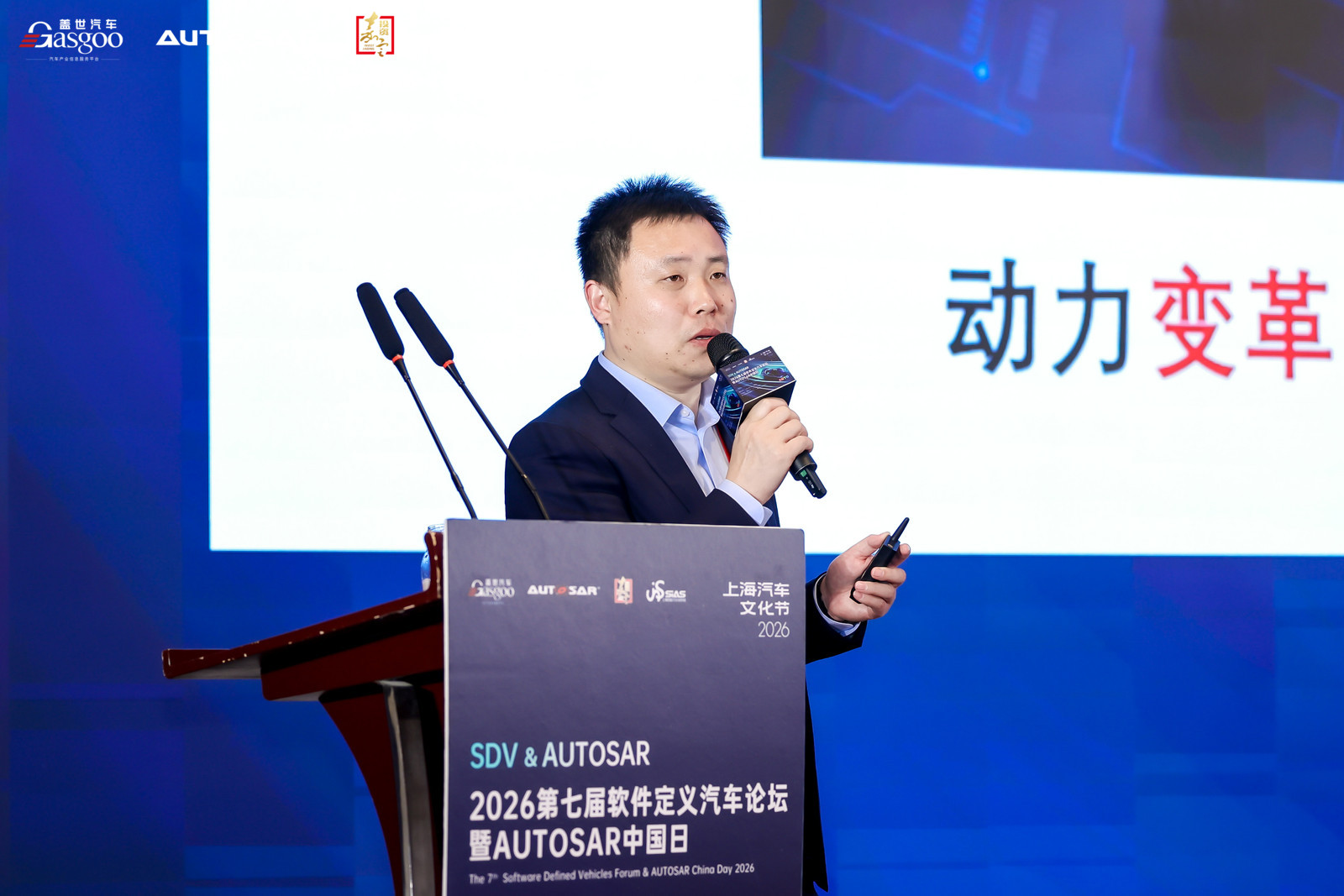
At this industry event, John.Zhang, Deputy General Manager of ZC Technology, delivered a brilliant speech titled “The Evolution of Automotive Basic Software Ecosystem: From Collaboration to Symbiosis.” The speech not only addressed macro-level industry trends but also delved into specific solutions, culminating in the release of a brand-new concept in the development process—making the entire development process fully open to customers.
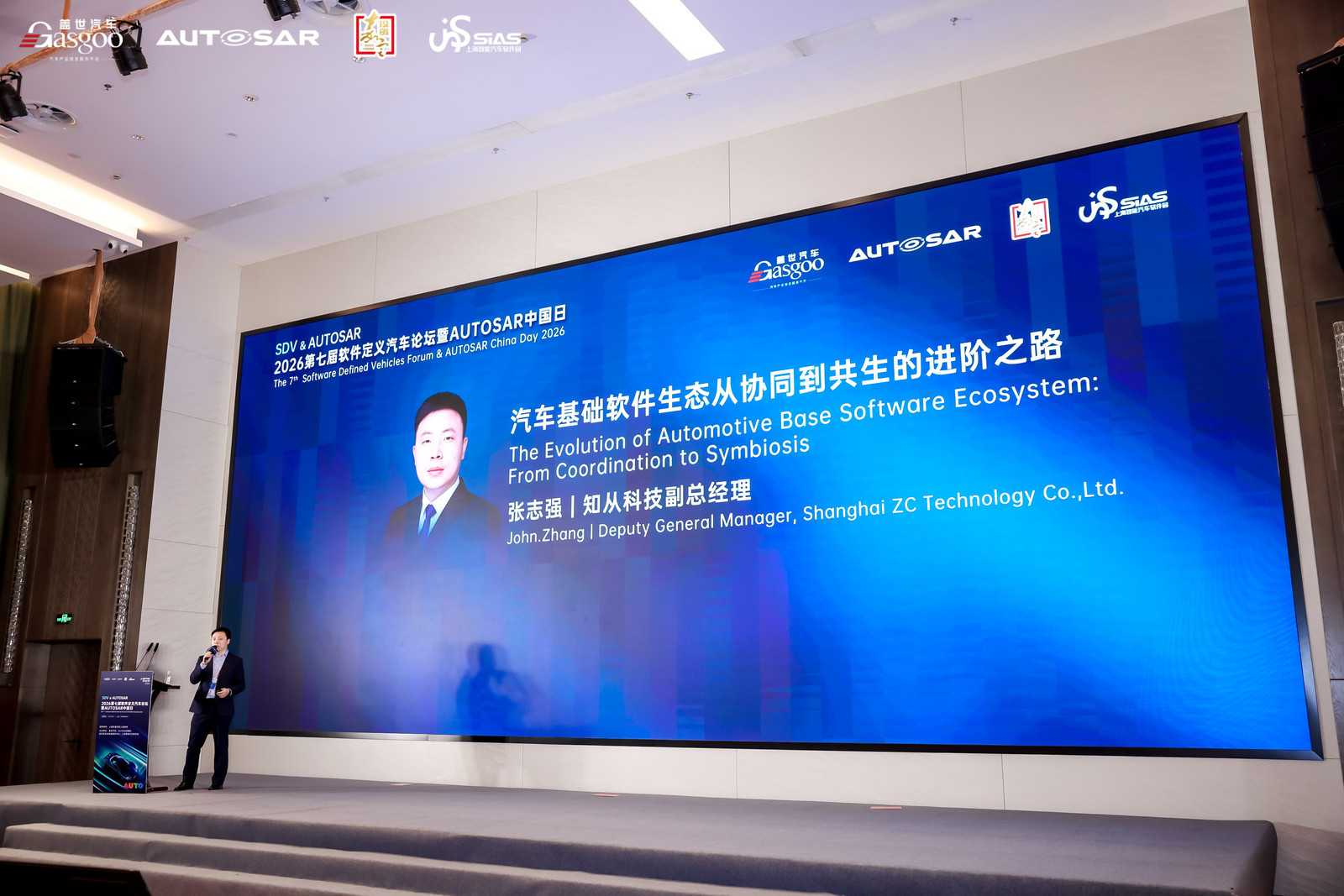
At the beginning of his speech, John. Zhang pointed out the core issue facing the industry today: in the era of software-defined vehicles, how can China's automotive industry achieve the essential leap from “collaboration” to “symbiosis”? This is not merely a technical challenge, but a strategic consideration that involves industry models, value logic, and ecosystem restructuring.
Basic Software: A Decisive Resource for Industrial Ecosystem Development
Against this industrial backdrop, the role of basic software is undergoing a fundamental transformation—it is no longer just a technical component, but a critical resource that determines the rapid development of the automotive industry ecosystem.
In his speech, ZC summarized the four core requirements that basic software must meet:
High Safety and Stability – the primary requirement of society and users
Strong Innovation and Personalization Capabilities – the key to building a solid reputation and delivering exceptional user experiences
Fast Delivery and Continuous Evolution – the convergence of agile development and rapid responsiveness
Low Cost and High Cost‑Effectiveness – a survival imperative in the face of fierce market competition
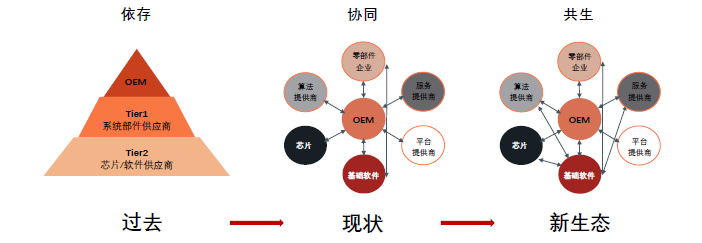
Ecosystem Evolution: The Three‑Stage Leap from “Collaboration” to “Symbiosis”
China’s automotive industry has gone through three stages of evolution. In the first stage, it was a linear model led by OEMs, with relatively independent links. This was followed by a multi‑player collaboration stage, where preliminary ecosystem cooperation began. Today, we are entering the third stage—a “symbiotic ecosystem” characterized by deep integration among vehicle manufacturers, chip suppliers, software companies, universities, and government entities. The shift from “collaboration” to “symbiosis” is not merely a change in wording; it represents a fundamental restructuring of value distribution, capability building, and risk‑sharing mechanisms. At its core lie value sharing, complementary capabilities, and shared risks.
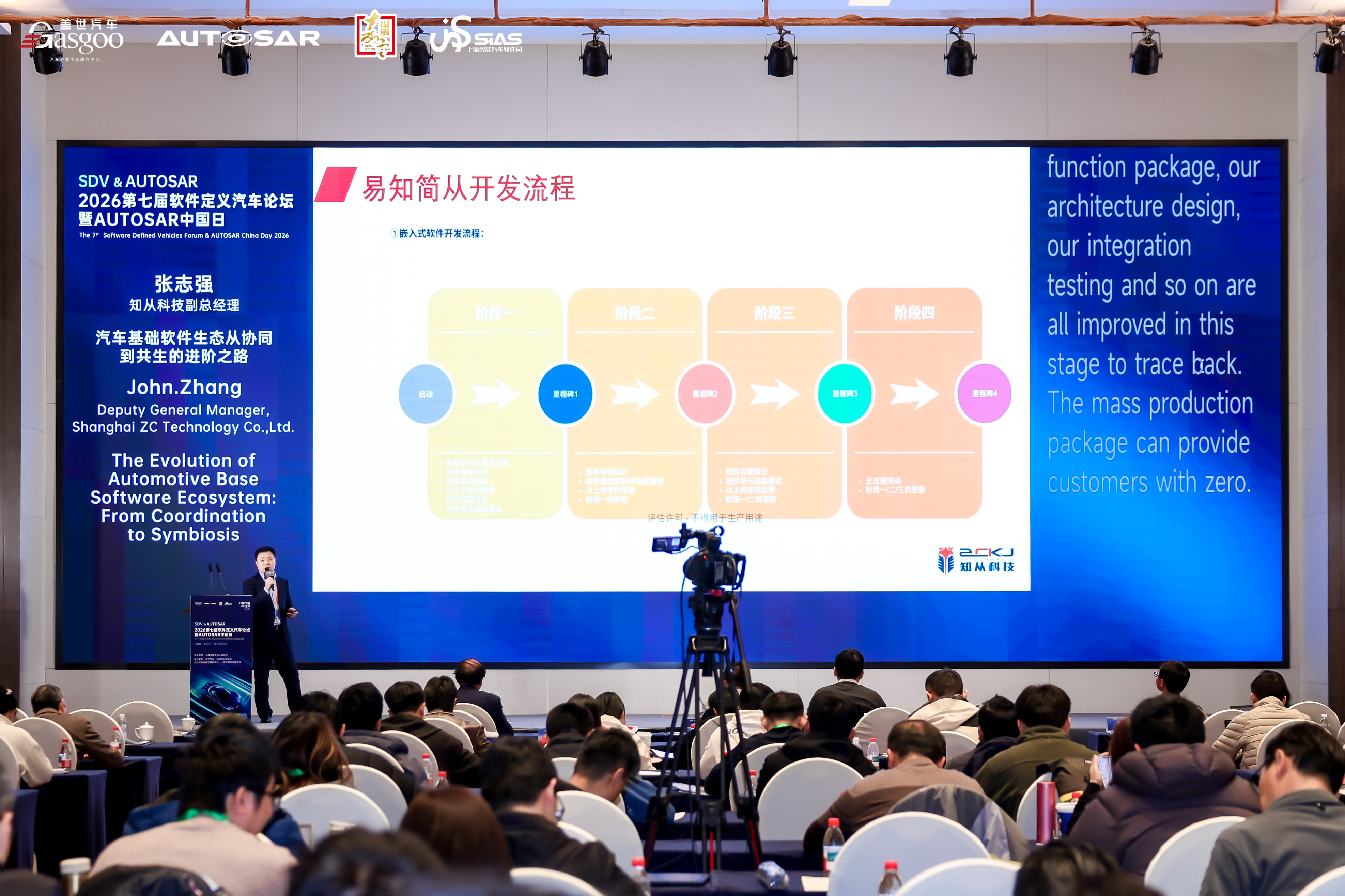
Easy to Know, Simple to Follow: A Development Process That Gives Customers Greater Confidence
In the past, when working with vendors, many customers often felt that the development process was like a “black box”—what stage were the features at? How could issues be tracked as they arose? Did the implementation details meet expectations? These concerns are what ZC hopes to completely address through “transparency.”
1. Feature Transparency
At the very start of a project, Zenable now provides customers with full access to a list of every feature to be implemented, along with the technical details of each functional module and the expected delivery standards. By sharing dashboards and documentation, customers can “participate” in the project throughout its lifecycle, rather than passively “receiving” the final results.
2. Development Progress Visibility
From requirements analysis and product design to development and testing, go‑live and operations, and then to customer feedback and iterative optimization—the entire “Zenable development process” is opened up to customers. Customers can check the current stage, the deliverables at each stage, and milestone completion status at any time, eliminating the need for repeated inquiries about “how the project is progressing.”
3. Closed‑Loop Issue Tracking
Issues are inevitable in software development. In the past, problem resolution was often confined to the internal team. Now, Zenable opens its issue tracking system to customers, achieving full transparency into defects. From issue submission, root cause analysis, fix verification, to final closure—the entire closed‑loop process is clearly visible, giving customers true peace of mind.
Real-World Challenges: Pain Points Persist Across the Industry Chain
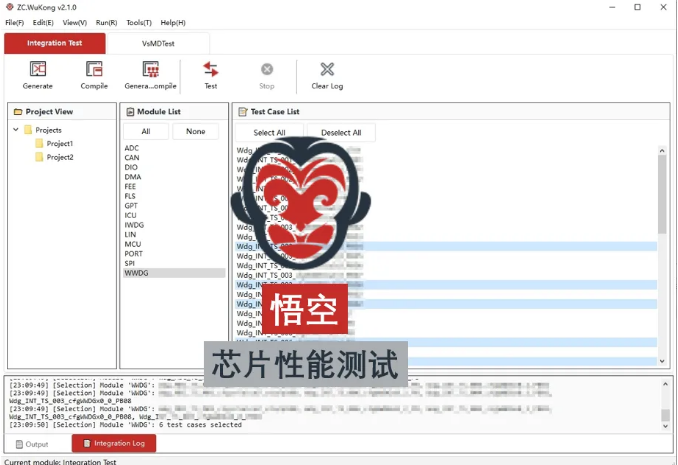
To address pain points faced by chip companies—such as long development cycles, software lag, and high cost pressures—ZC offers the “MuNiu” basic software product and ecosystem support to help accelerate controller mass production and chip volume ramp-up. It also provides the “Wukong” chip performance testing tool, which uses extensive test cases to improve the efficiency of chip function evaluation. Leveraging deep foundational expertise, Zenable offers precise metrics for chip design and helps optimize talent allocation, systematically reducing costs and increasing efficiency to assist chip companies in overcoming mass production and ecosystem bottlenecks.
For parts suppliers struggling with building basic software platforms, complex customer standards, and chip selection difficulties, Zenable provides the “MuNiu” basic software product and supporting services to rapidly establish reliable software platforms and improve development efficiency and quality. It also offers the “Xuanwu” testing tool to efficiently meet diverse OEM standards, along with the “Wukong” tool to assist in chip function testing.
For OEMs facing challenges such as inconsistent component quality, high software change costs, complex chip selection, and profit pressures, Zenable delivers the “MuNiu” basic software product and development services to enhance vehicle development efficiency and quality. The “Xuanwu” testing tool automates highly reusable test cases to ensure vehicle quality, while the “Wukong” chip testing tool provides professional evaluation reports to support chip selection decisions.
Solution: The “Basic Software + Toolchain + Services” Trinity
In response to pain points across the ecosystem, ZC has built a trinity solution comprising “Basic Software + Toolchain + Services.”
At the basic software level, the MuNiu platform is fully compatible with mainstream chips and holds dual certifications: ISO 26262 ASIL D and ASPICE CL3.
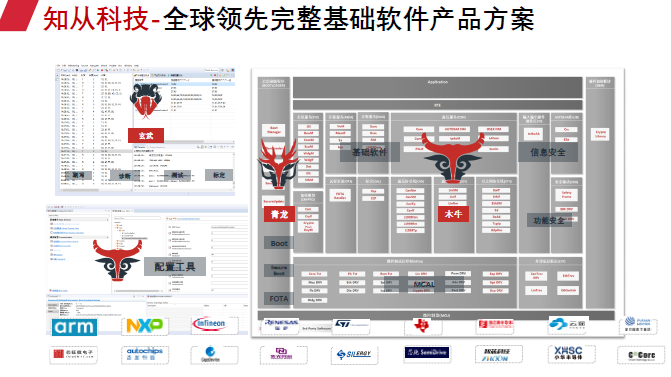
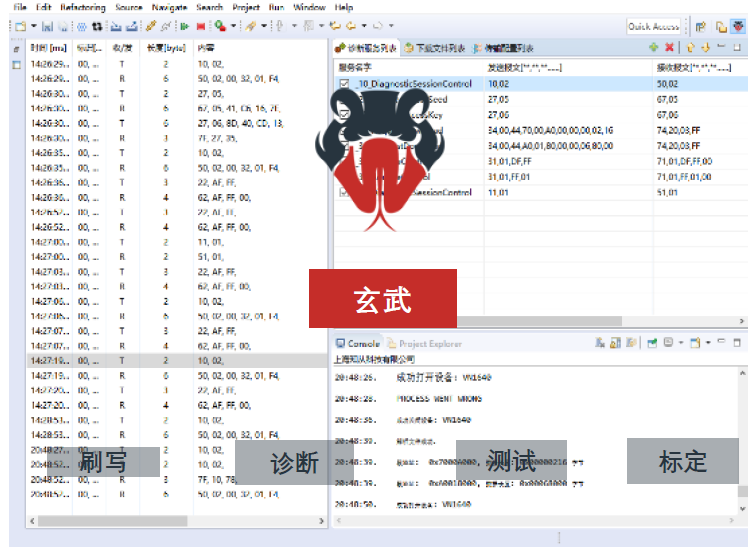
On the toolchain side, “Xuanwu” focuses on software testing and validation;
“Wukong” provides chip function testing;
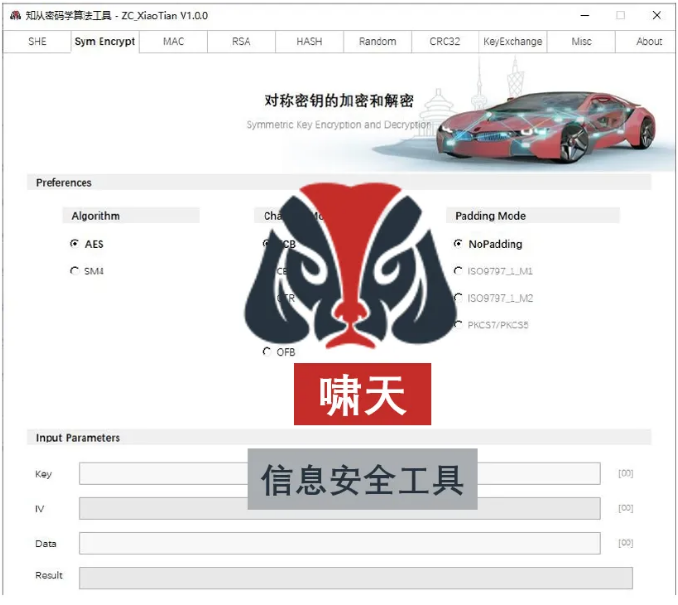
“Xiaotian” supports a variety of encryption and decryption algorithms, and is offered free of charge to the entire industry;
On the service level, ZC provides customers with full-process software development services—from prototype to mass production.
Practical Results: Initial Success in Ecosystem Development
To date, tangible progress has been achieved: collaboration with leading chip companies has shortened mass production cycles by 30%; the talent cultivated has become a key driver of industrial innovation; and the ecosystem under development is gradually unleashing synergistic effects. These results demonstrate that through ecosystem-based collaboration, both industry efficiency and quality can be significantly improved.
From Collaboration to Symbiosis: ZC's Mission and Vision
At the conclusion of his speech, ZC reaffirmed the company's mission and vision:
Corporate Mission: More Reliable Software, More Efficient Development
Corporate Vision: To Become a Globally Leading Automotive Basic Software Company
Zenable's DNA: Tackle the Hard Challenges, Be Responsible, Move Fast
On the journey of the automotive industry from “collaboration” to “symbiosis,” ZC chooses to build a new kind of relationship with its customers through technical strength and process transparency—allowing customers to see not only our professional depth, but also our thinking, actions, and rigor.
When you choose Zenable, what you receive is not only the technical solutions delivered by the three product families—MuNiu, Xuanwu, and Wukong—but also a partner who is open, reliable, and worthy of your trust.
We look forward to joining hands with you on your next project to jointly advance the prosperity and development of the automotive basic software ecosystem.
