做车载基础软件这些年,我们见过太多卡在半路的AUTOSAR项目。
有的Demo跑得很漂亮,一进入功能安全审计就暴露出追溯链条断裂等问题;
有的前期报价很有吸引力,等到临近交付SOP,诊断、E2E、底层驱动接二连三出问题;
还有的团队以为拿到源码包就万事大吉,最后才发现,配套的安全举证、长期维护、版本补丁根本跟不上量产节奏。
很多时候,项目受阻并不是AUTOSAR标准本身的问题,而是大家低估了一件事:一套能用在量产控制器上的CP基础软件,交付的从来不止是代码。
知从科技作为AUTOSAR组织会员、AUTOSAR中国中心成员,这篇文章,我们不拿虚构的客户竞标故事做背书,只分享知从在长期交付中沉淀下来的整套思路,同时把行业里反复出现的高频坑点摊开。

如果你正在为整车或者Tier1挑选AUTOSAR CP供应商,这套逻辑,可以直接拿来对照评估。
一、为什么我们坚持打造面向全链路量产的AUTOSAR CP
行业里一直有一个很容易踩的认知误区:AUTOSAR CP就是一套开箱编译、跑通示例工程的源码组件。
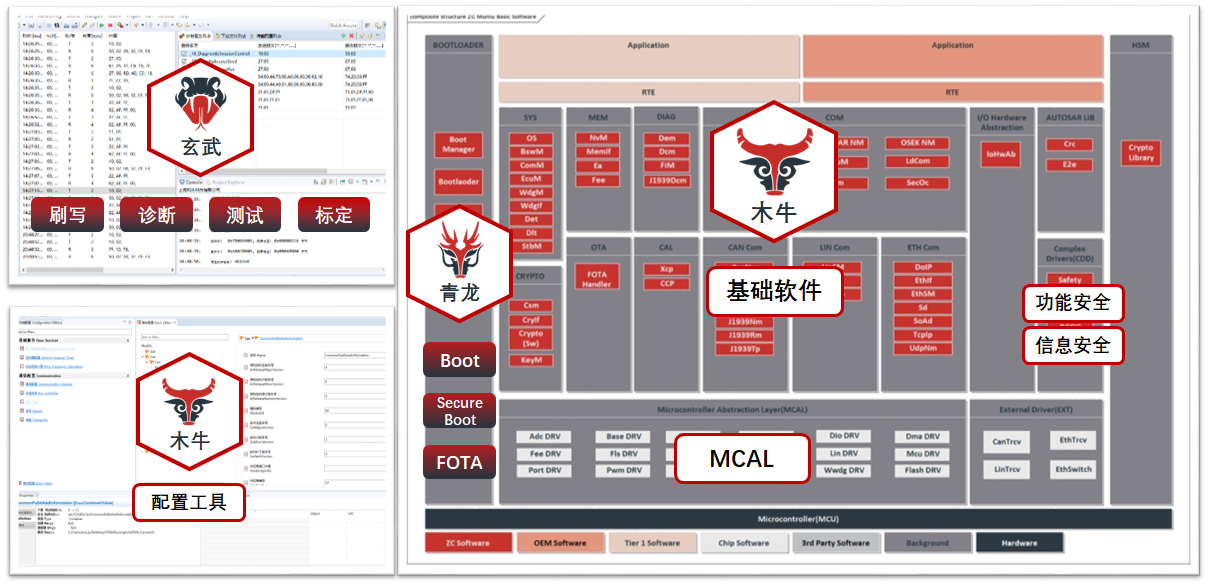
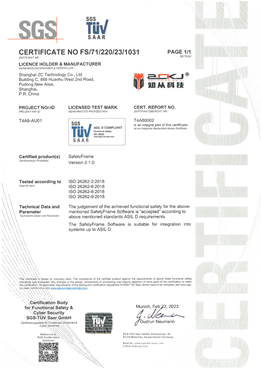
真正走过完整的量产流程就会明白,它承载的是一整条长链路:AUTOSAR规范合规、功能安全ASIL举证、面向ISO/SAE 21434的信息安全流程支撑与举证物料、商用密码适配、多核与内存隔离、芯片适配、可视化配置工具、全链路可追溯文档、回归测试包、安全案例支撑、版本迭代、长期补丁维护。这条链路上,任何一环薄弱,都有可能成为整个控制器项目的瓶颈。
也正是基于这个现实,知从科技的AUTOSAR CP 木牛基础软件平台ZC.MuNiu,从产品设计之初,目标就不是跑通演示工程,而是围绕这条完整量产与安全链路搭建能力。
二、四个环节:纸面阶段最容易拉开差距
当客户发起需求评估时,整个筛选的重心集中在前序对接与评审;后续移植、集成、测试更多属于落地执行。选型方就用这四步做标尺:RFQ应答、方案评审、指标对标和Kick-off基线。
RFQ需求应答:第一份反馈就能分出高下
收到客户的RFQ,里面包含平台定义、ASIL分解、主控型号、商用密码要求、主机厂诊断规范、时间节点以及各类硬性约束。
一份合格的应答,不该只是寄出一份通用产品手册。我们的做法是把客户需求逐条映射到各个软件组件,主动识别需求冲突、给出合理裁剪方案,清晰标注交付物清单、前置依赖以及潜在风险;区分哪些能力由标准模块原生覆盖,哪些需要定制扩展,提前同步安全举证物料清单。
这也是一个很直观的信号:如果供应商的回复只是模板填空,不去拆解你的安全与量产约束,就要提前提高警惕。
技术方案评审(DRB):看软件栈,更看协同姿态
进入深度方案评审,双方需要对着架构逐一核验:OS、COM、RTE、诊断栈、E2E、非易失存储、看门狗、故障管理,以及按项目ASIL分解和芯片MPU能力裁剪后的内存保护与时间保护配置。
在知从,参与评审的不只是基础软件研发,项目、流程、测试、销售乃至功能安全、信息安全工程师都会同步介入。面对客户平台的特殊约束,我们倾向于和客户一起打磨方案,而不是简单用一句“AUTOSAR规范就是这样”来回绝量产侧的诉求。
愿意沉下来一起啃边界条件的团队,和交付代码之后就把集成、举证压力全部转移出去的团队,完全是两种交付逻辑。
技术指标对标与方案权衡:不能只盯报价
多供应商对标时,不能只盯着报价。有价值的对标维度包括:AUTOSAR版本合规度、配套工具链、可追溯体系、安全举证完备性、商用密码模块实现、RAM/ROM资源占用、中断延迟、回归测试覆盖率、版本迭代与补丁交付周期。
知从不会把低价作为竞争的第一抓手。短期压低报价,往往意味着安全文档、追溯矩阵、专家支持被压缩;等到认证阶段集中整改,额外投入的人力、时间成本,常常远超过当初省下的差价。
项目启动Kick-off:把共识固化成基线
如果顺利达成合作,Kick-off(KO)并不是一场仪式。它最重要的价值,是锁定全套基线:软件版本基线、配置基线、交付物基线、评审节点、安全交付包、变更管控流程、问题上报通道,以及甲乙双方清晰的权责边界。
从项目第一天就把口头约定转化为可跟踪、可审计的计划,从源头减少后续分歧。
三、进入交付阶段:体系能力才真正经受考验
方案再漂亮,最终还是要看落地兑现。方案评审看的是“能不能做”,项目跑起来之后,考验的是“能不能稳定、可控地走完量产全周期”。
项目对接负责人熟悉车规IPD以及功能安全开发节奏,能够配合客户一同识别强制性评审节点,区分法定/标准强制交付项与内部简化流程,主动同步基线变动、待确认项、风险预警等等,客户不需要单方面催问进度。
我们给自己设定的硬目标:严格按照既定基线交付,保障模块、配置、测试用例、安全物料按时输出;一旦出现问题,给出明确的排障窗口,不会无限期搁置。
支撑这套交付的,是知从三份持续运转的核心台账。
1.需求与配置变更台账:每一处配置调整、模块修改、RTE变更都完整留痕,记录提出方、安全影响、评审意见、版本追溯,守住安全举证链条;
2.安全与认证物料台账:统一管理安全目标、安全需求、可追溯矩阵、测试报告、安全案例支撑材料,在第三方审计时可以快速调取;
3.风险与问题台账:提前识别芯片errata、工具链兼容、标准版本迭代、模块耦合等风险,做到风险前置,而不是等到故障爆发之后再救火。
这三份台账可以是一套需求/ALM工具里的三个视图,也可以是三份独立台账;核心是变更、风险、证据之间建立可审计关联。
四、研发策略:标准化底座+风险隔离的定制能力
AUTOSAR的价值在于标准化,但几乎每一个量产平台,都会伴随差异化诉求:自研模块对接、定制诊断逻辑、国密安全扩展、特殊多核异构主控、定制故障管理策略等。
我们采用两套并行的研发逻辑,把稳定和创新做风险隔离。
在标准模块域,OS、COM、RTE、存储、看门狗等组件严格遵循AUTOSAR规范,尽量避免脱离标准的自定义改动;诊断栈的定制收敛在配置层与主机厂规范适配层,不在DCM/DEM的标准核心逻辑上做非规范改造。
在高风险定制域,比如商用密码、安全扩展、特殊芯片适配这类需求,由具备车规安全模块量产交付经验的底层软件与功能安全工程师承接,并在变更台账中标注责任人。
这套思路的核心,是不走两个极端:既不会拿着僵化的标准拒绝客户合理的差异化诉求,也不会为了满足定制需求,把整个软件栈改得“面目全非”难以维护、难以通过安全认证。
五、问题分级与闭环:止于一线技术负责人
任何车载开发项目都不可能做到零问题,真正拉开差距的,是问题出现之后的流转、兜底和闭环方式。
知从建立了清晰的问题分级上报通道,必要时可以直达最高决策人,作为最高兜底。但我们内部的导向非常明确:常规配置、集成、技术问题,优先在一线技术负责人层面闭环;升级通道是兜底,不是常态化的甩锅通道。
行业里并不少见另一种情况:供应商的上报机制看起来完善,一旦遇到棘手问题,就向外推责,归于芯片、工具链、标准本身,最后由客户承担整改、延期的代价。我们在搭建机制的时候,就是希望避开这个陷阱。
六、行业高频踩坑:选型时一定要警惕的四类情况
下面这些,都是我们在大量项目协作中观察到的共性痛点,也是我们整套交付体系重点规避的方向。
1.缺少完整交付基线,客户被迫承担基础软件管理工作。交付包里只有源码,项目计划、变更规范、安全追溯物料残缺。客户团队不得不投入大量人力,一点点梳理配置、补齐台账、评估安全影响,等于替供应商完成本应交付的项目管理工作。
2.评审汇报重术语、轻结论。汇报时堆砌大量AUTOSAR专业名词,却讲不清当前阻塞点、对ASIL目标的影响、明确的整改计划。宝贵的安全评审窗口,在模糊的沟通里白白消耗。
3.看似微小的底层问题,长期拉锯拖累认证节点。E2E校验、时间保护、Flash驱动、RTE生成这类问题,单独看不算宏大,但反复调试、反复推翻,一点点挤压认证和SOP的窗口期。在车规项目里,窗口一旦错过,代价极高。
4.临近认证才暴露缺失,多方相互推诿。前期同步一切正常,直到第三方安全审计介入,才发现追溯断裂、文档缺失、模块无法满足安全分解;之后各方来回划清责任,举证成本极高。
七、容易被低估的加分项
很多客户选型时,会重点关注代码、指标、报价,容易忽略长期协作里几个很关键的部分。
第一、项目复盘。交付收尾不代表项目结束。我们的复盘不是一句简单的“顺利交付”,而是回溯每一次变更、每一处风险、每一个关键决策,沉淀可复用的配置规范、避坑清单,持续迭代产品与交付流程,把单次项目经验,沉淀为可以惠及所有客户的产品资产。
第二、团队风格。基础软件、功能安全、信息安全的团队,更偏向务实解决问题。不会在术语和流程形式上反复拉扯;一旦发现方案和安全目标冲突,直接抛出备选方案推进。在高压的认证周期中,能够减少很多无意义的情绪内耗。
第三、长期技术路线。我们长期参与AUTOSAR生态,时刻跟进AUTOSAR版本演进、功能安全、信息安全法规以及车规商用密码的最新要求,愿意持续投入底层能力建设,而不是追求短期走量。在这个赛道,长期主义最终会惠及选择它的平台方。
八、给正在选型AUTOSAR CP的团队:一套可带走的评估框架
必须说明:国内车载基础软件赛道,还有不少扎实靠谱的AUTOSAR CP厂商。下面这套标尺,不是只为知从而设,任何团队都可以拿它去评估供应商,同样也是我们内部持续自检的标准。
核心判断标准:
看前期应答质量:是否真正拆解你的安全、认证、芯片、国密需求,而不是只发送通用宣传材料;
看方案评审姿态:是否愿意协同打磨边界条件,而不是拿标准条文回避量产约束;
信流程台账,不信口头承诺:变更基线、可追溯矩阵、安全交付包、分级问题机制是否真实落地;
看问题闭环位置:常规问题能不能在一线兜住,还是稍有卡点就必须层层升级;
看一线工程师:商务沟通相对容易,真正决定认证成败的,是负责模块开发、安全举证的工程师。
如果你正在和供应商沟通,可以直接问这四个问题:
1 是否可以一次性提供完整基线:软件版本、配置基线、安全交付物、可追溯矩阵?
2 在第三方安全审计介入之前,你们的追溯矩阵和评审记录能不能支撑我们自查出大部分阻塞点?
3 如果审计中确实发现了阻塞点,团队能否清晰给出影响域、整改责任人和时限?
4 如果发现模块不满足ASIL分解,是否第一时间同步风险,还是自行闷头调试?

最后想说:选择一套AUTOSAR CP,买的不只是OS、COM、RTE这些组件。选择的,是这家厂商能不能把你的安全目标、量产节点当成最重要的约束。
只是验证这件事的代价往往很高,有时就是一个延期的量产项目。希望每一个正在选型的团队,都可以避开这些坑,找到适配自己平台的基础软件伙伴。
————————————
In our years working on automotive basic software, we have seen too many AUTOSAR projects stall halfway through. Some demos run beautifully, but as soon as they enter a functional safety audit, problems such as a broken traceability chain are exposed. Some initial quotations are very attractive, but as delivery approaches SOP, diagnostics, E2E, and low-level drivers run into one problem after another. Still other teams assume everything is fine once they receive the source code package, only to find that the supporting safety evidence, long-term maintenance, and version patches cannot keep up with mass-production cadence.
In many cases, projects are blocked not because of the AUTOSAR standard itself, but because people underestimate one thing: a CP basic software stack that can be used on a mass-production controller never delivers code alone.
As an AUTOSAR member and an AUTOSAR China Center member, ZC Technology will not rely on fabricated customer bidding stories as credentials in this article. We will only share the framework we have built through long-term delivery and lay out the high-frequency pitfalls that recur across the industry.
If you are selecting an AUTOSAR CP supplier for an OEM or Tier1, you can use this logic directly as an evaluation checklist.
I. Why We Insist on Building AUTOSAR CP for Full-Chain Mass Production
There is an easy cognitive trap in the industry: AUTOSAR CP is just a source-code component that compiles out of the box and runs a sample project.
Only after going through a complete mass-production process does it become clear that it carries an entire long chain: AUTOSAR specification compliance, ASIL safety argumentation, process support and evidence materials for ISO/SAE 21434 cybersecurity, commercial cryptography adaptation, multi-core and memory isolation, chip adaptation, visual configuration tools, full-chain traceable documentation, regression test packages, safety case support, version iteration, and long-term patch maintenance. If any link in this chain is weak, it can become the bottleneck for the entire controller project.
It is precisely against this reality that the AUTOSAR CP MuNiu basic software platform, ZC.MuNiu, was designed from the outset not to run a demo project, but to build capabilities around this complete mass-production and safety chain.
II. Four Stages: Where the Biggest Gaps Emerge on Paper
When a customer initiates requirements evaluation, the screening focus is concentrated on upfront engagement and reviews; subsequent porting, integration, and testing are more about execution. Selection teams can use these four steps as a yardstick: RFQ response, solution review, metric benchmarking, and Kick-off baseline.
RFQ Response: The First Response Already Separates the Contenders
The RFQ received from a customer includes platform definition, ASIL decomposition, main controller model, commercial cryptography requirements, OEM diagnostic specifications, milestones, and various hard constraints.
A qualified response should not simply send out a generic product brochure. Our approach is to map each customer requirement to individual software components, proactively identify requirement conflicts, propose reasonable tailoring options, clearly mark the deliverable list, prerequisites, and potential risks; distinguish which capabilities are natively covered by standard modules and which require custom extensions; and share the safety evidence material list in advance.
This is also a very intuitive signal: if a supplier's reply is merely template filling and does not decompose your safety and mass-production constraints, you should raise your vigilance early.
Technical Solution Review (DRB): Look at the Software Stack, but More at the Willingness to Collaborate
In an in-depth solution review, both parties need to verify the architecture item by item: OS, COM, RTE, diagnostic stack, E2E, non-volatile storage, watchdog, fault management, and memory protection and timing protection configurations tailored according to the project's ASIL decomposition and the chip's MPU capabilities.
At ZC, reviews are not attended only by basic software R&D; project, process, testing, sales, and even functional safety and cybersecurity engineers all participate in a synchronized manner. When facing special constraints of a customer platform, we prefer to refine the solution together with the customer rather than dismiss mass-production-side requests with a simple "that's what the AUTOSAR specification says."
A team willing to dig into boundary conditions together and a team that transfers all integration and evidence burdens to the customer after delivering code represent two entirely different delivery philosophies.
Technical Metric Benchmarking and Solution Trade-offs: Don't Focus Only on Price
When benchmarking multiple suppliers, do not focus only on price. Valuable benchmarking dimensions include AUTOSAR version compliance, supporting toolchain, traceability system, completeness of safety evidence, commercial cryptography module implementation, RAM/ROM resource footprint, interrupt latency, regression test coverage, and version iteration and patch delivery cycles.
ZC does not make low price its primary competitive lever. Pushing prices down in the short term often means safety documentation, traceability matrices, and expert support are cut back; when remediation is concentrated during the certification phase, the additional manpower and time costs often far exceed the price difference saved.
Project Kick-off: Turn Consensus into a Baseline
If cooperation is reached, Kick-off (KO) is not a ceremony. Its most important value is to lock down the full set of baselines: software version baseline, configuration baseline, deliverable baseline, review milestones, safety delivery package, change control process, issue escalation channel, and clear boundaries of responsibility between customer and supplier.
Convert verbal agreements into a trackable, auditable plan from day one to reduce later disagreements at the source.
III. Entering Delivery: Systemic Capability Is Truly Tested
No matter how good the solution looks, ultimately it must be delivered. Solution reviews test whether something can be done; once the project is running, the test is whether it can complete the full mass-production cycle stably and under control.
The project interface lead is familiar with automotive-grade IPD and the cadence of functional safety development, can work with the customer to identify mandatory review gates, distinguish legally/standard-mandated deliverables from internally simplified processes, and proactively communicate baseline changes, open items, and risk warnings—so the customer does not have to chase progress unilaterally.
We set ourselves hard targets: deliver strictly according to the agreed baseline and ensure modules, configurations, test cases, and safety materials are output on time; once an issue arises, provide a clear troubleshooting window rather than leaving it pending indefinitely.
Supporting this delivery are three core ledgers that operate continuously at ZC.
Requirements and Configuration Change Ledger: Every configuration adjustment, module modification, and RTE change is fully recorded, including the requester, safety impact, review comments, and version traceability, preserving the safety argumentation chain.
Safety and Certification Material Ledger: Centrally manages safety goals, safety requirements, traceability matrices, test reports, and safety case supporting materials, enabling rapid retrieval during third-party audits.
Risk and Issue Ledger: Identifies risks such as chip errata, toolchain compatibility, standards version evolution, and module coupling in advance, putting risk management upfront rather than firefighting after failures erupt.
These three ledgers can be three views in a requirements/ALM tool or three standalone ledgers; the key is to establish auditable links among changes, risks, and evidence.
IV. R&D Strategy: A Standardized Foundation Plus Risk-Isolated Customization
AUTOSAR's value lies in standardization, but virtually every mass-production platform comes with differentiated requirements: integration with in-house modules, custom diagnostic logic, GuoMi security extensions, special heterogeneous multi-core main controllers, custom fault management strategies, and so on.
We use two parallel R&D tracks to isolate risk between stability and innovation.
In the standard module domain, components such as OS, COM, RTE, storage, and watchdog strictly follow the AUTOSAR specification, avoiding non-standard modifications as much as possible; diagnostic stack customization is confined to the configuration layer and OEM specification adaptation layer, with no non-standard changes to the standard core logic of DCM/DEM.
In the high-risk customization domain—such as commercial cryptography, security extensions, and special chip adaptation—requirements are handled by low-level software and functional safety engineers with experience in production delivery of automotive-grade safety modules, with responsible owners marked in the change ledger.
The core of this approach is to avoid two extremes: neither rejecting reasonable customer differentiation with a rigid standard nor distorting the entire software stack beyond recognition to satisfy custom requirements, making it hard to maintain and hard to pass safety certification.
V. Issue Grading and Closure: Resolve at the Frontline Technical Lead
No automotive development project can achieve zero issues; what truly separates suppliers is how issues are routed, backed up, and closed after they arise.
ZC has established a clear graded issue escalation channel that can reach top decision-makers when necessary as the ultimate backstop. But our internal orientation is very clear: routine configuration, integration, and technical issues should preferably be closed at the frontline technical lead level; the escalation channel is a backstop, not a routine blame-shifting channel.
It is not uncommon in the industry for a supplier's escalation mechanism to look complete, yet once a thorny issue arises, the supplier shifts responsibility outward to the chip, toolchain, or standard itself, leaving the customer to bear the cost of remediation and delay. When building our mechanism, we specifically sought to avoid this trap.
VI. Common Industry Pitfalls: Four Situations to Watch for During Selection
The following are common pain points we have observed across a large number of project collaborations, and they are also the areas our delivery system focuses on avoiding.
Lack of a complete delivery baseline forces the customer to take on basic software management work. The delivery package contains only source code, with project plans, change specifications, and safety traceability materials incomplete. The customer team has to invest significant manpower to sort out configurations, fill in ledgers, and assess safety impacts piece by piece—effectively doing the supplier's project management work that should have been delivered.
Review presentations are heavy on terminology and light on conclusions. They pile up AUTOSAR jargon but cannot clearly explain the current blockers, their impact on ASIL goals, or a concrete remediation plan. Precious safety review windows are wasted in vague communication.
Seemingly minor low-level issues drag on and delay certification milestones. Issues such as E2E checks, timing protection, Flash drivers, and RTE generation may not look grand in isolation, but repeated debugging and repeated rework gradually squeeze the certification and SOP windows. In automotive projects, missing a window is extremely costly.
Gaps are exposed only near certification, and multiple parties pass the buck. Everything appears normal in earlier synchronization until a third-party safety audit intervenes, only then revealing broken traceability, missing documentation, and modules unable to satisfy safety decomposition; afterward, all parties go back and forth to delineate responsibility, and the evidence cost is extremely high.
VII. Easily Underestimated Differentiators
Many customers focus on code, metrics, and price during selection and easily overlook several critical aspects of long-term collaboration.
First, project retrospectives. Delivery completion does not mean the project is over. Our retrospectives are not a simple "delivered successfully"; they trace every change, every risk, and every key decision, distill reusable configuration standards and pitfall checklists, continuously iterate products and delivery processes, and turn single-project experience into product assets that benefit all customers.
Second, team style. Our basic software, functional safety, and cybersecurity teams lean toward pragmatic problem-solving. They do not get stuck in repeated wrangling over terminology and process formalities; once a solution is found to conflict with safety goals, they directly put forward alternatives and move forward. During high-pressure certification cycles, this reduces a great deal of meaningless emotional friction.
Third, long-term technology roadmap. We have long participated in the AUTOSAR ecosystem, continuously track AUTOSAR version evolution, functional safety and cybersecurity regulations, and the latest requirements for automotive-grade commercial cryptography, and are willing to keep investing in low-level capability building rather than pursuing short-term volume. In this field, long-termism ultimately benefits the platform owners who choose it.
VIII. For Teams Selecting AUTOSAR CP: A Take-Away Evaluation Framework
It must be noted that in China's automotive basic software field, there are still many solid and reliable AUTOSAR CP vendors. The following yardstick is not designed only for ZC; any team can use it to evaluate suppliers, and it is also the standard we continuously use for internal self-checks.
Core judgment criteria:
Look at the quality of the initial response: Does the supplier truly decompose your safety, certification, chip, and GuoMi requirements, rather than merely sending generic marketing materials?
Look at the posture in solution reviews: Is the supplier willing to collaboratively refine boundary conditions, rather than using standard clauses to evade mass-production constraints?
Trust process ledgers, not verbal promises: Are the change baseline, traceability matrix, safety delivery package, and graded issue mechanism actually implemented?
Look at where issues are closed: Can routine issues be contained at the frontline, or must every small blocker be escalated level by level?
Look at the frontline engineers: Commercial communication is relatively easy, but what really determines certification success is the engineers responsible for module development and safety argumentation.
If you are communicating with a supplier, you can ask these four questions directly:
Can you provide a complete baseline in one go: software version, configuration baseline, safety deliverables, and traceability matrix?
Before a third-party safety audit intervenes, can your traceability matrix and review records support us in self-identifying most blockers?
If blockers are indeed found during the audit, can your team clearly identify the impact scope, remediation owner, and deadline?
If a module is found not to satisfy ASIL decomposition, will you communicate the risk immediately, or quietly debug it on your own?
Finally: when choosing an AUTOSAR CP stack, you are not just buying components such as OS, COM, and RTE. You are choosing whether the vendor can treat your safety goals and mass-production milestones as its most important constraints.
The cost of verifying this is often high—sometimes it is a delayed mass-production program. We hope every team currently selecting a supplier can avoid these pitfalls and find a basic software partner suited to its platform.
 写回答