- ZC.XuanWu Bootloader Upper Computer Product Manual(Requires approval before it can be trialed after application)
- ZC.MuNiu DEXT Studio Product Manual
- ZC.MuNiu Configuration Tool Product Manual
- ZC.XuanWu Program Update And Diagnostic Testing Tool Product Manual
- ZC.MuNiu MCAL Configuration Tool Product Manual Based on Flagchip FC7300
- ZC.MuNiu DBC Import and Configuration
- ZC Black Box Software Product Manual Based on Infineon TC277
- ZC.XUANWU XCP CALIBRATION UPPER COMPUTER PRODUCT MANUAL
- ZC.XUANWU CYBERSECURITY INTRODUCTION
- ZC.XIAOTIAN CYBERSECURITY TOOL(Can be downloaded and tried directly)
- ZC.XIAOTIAN CYBERSECURITY ALGORITHM TOOLS
- ZC.WUKONG MCAL TEST TOOL
- ZC.XUANWU COMPRESSED TRANSMISSION
- ZC.Xuanwu Bootloader Upper Computer(Can be downloaded and tried directly)
- ZC.MuNiu MCAL Configuration Tool Product Manual Based on NXP S32K14x
1 CYBERSECURITY INTRODUCTION
With the advancement of automotive new four modernizations (particularly connectivity and autonomous driving), there is a growing demand for vehicles to connect with multiple devices. Such connectivity can significantly enhance automotive and traffic safety, promote green development, and facilitate information exchange. Specifically, in-vehicle devices need not only to connect with smart devices like smartphones but also to seamlessly access the internet, enabling data sharing with traffic management systems and surrounding vehicles. Correspondingly, the importance of automotive cybersecurity has become increasingly prominent.
Furthermore, as vehicle connectivity and intelligence deepen, alongside the widespread adoption of cloud computing, big data technologies, and the extensive deployment of Advanced Driver Assistance Systems (ADAS), ensuring automotive cybersecurity has become an inevitable requirement for the development of next-generation vehicles.
As cybersecurity risks continue to escalate, malicious interference with vehicle systems—such as braking, acceleration, and steering—could lead to severe consequences. In response, automotive cybersecurity has emerged as a critical protective technology for networked information. Rooted in cryptography, it employs symmetric or asymmetric encryption algorithms to safeguard data, significantly reducing the risks of information leaks and tampering.
The mainstream security mechanisms in automotive software include the following:
Ø SecureBoot
Ø SecureUpdate
Ø SecureDiagnostic
Ø SecureStorage
Ø SecOC
Ø SecureLog
Ø SecureDebug
The security mechanisms related to flashing and diagnostics mainly include the following two types:
SecureUpdate
Secure updates are implemented to guarantee the authenticity of software to be installed. By performing signature verification on FLASH data (supporting asymmetric algorithms like RSA /ECDSA and symmetric encryption such as SHA hashing), the system validates the code's authenticity. The ECU will only permit programming new firmware into FLASH when the signature verification is successful. This prevents downgrading devices to older software versions containing known security vulnerabilities, thereby achieving end-to-end code authenticity protection and defending against unauthorized software tampering.
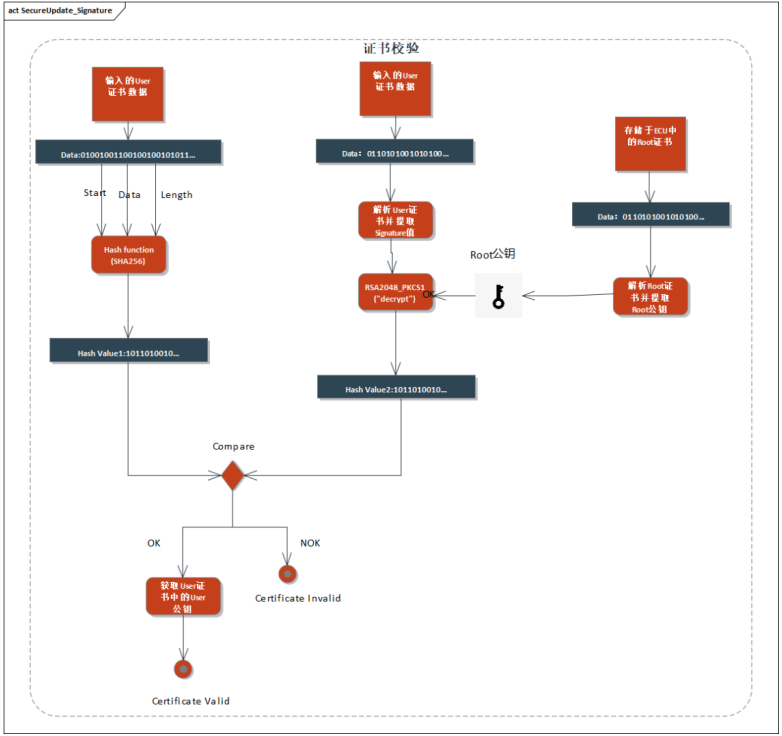
SecureDiagnostic
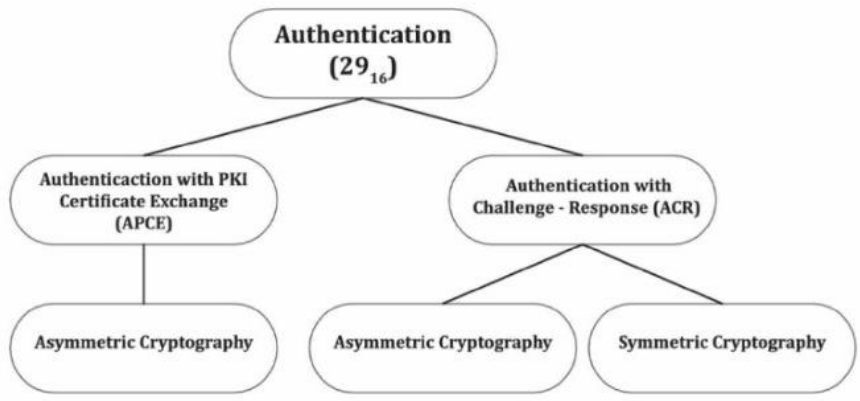
Security diagnosis confirms the identity of the client through a certain authentication algorithm, thereby determining whether the client is allowed access. Based on the UDS diagnostic protocol, through the UDS 0x27 service, symmetric encryption and asymmetric encryption algorithms are used to dynamically generate authentication credentials based on random number seeds to determine the client's identity. Secondly, it can also be supported through the UDS 0x29 service based on the ISO14229-1:2020 standard by supporting the following two security concepts:
Ø The PKI certificate exchange process based on the use of asymmetric cryptography.
Ø Based on a challenge-response process without PKI certificates, asymmetric encryption algorithms with software authentication tokens or symmetric passwords are used.
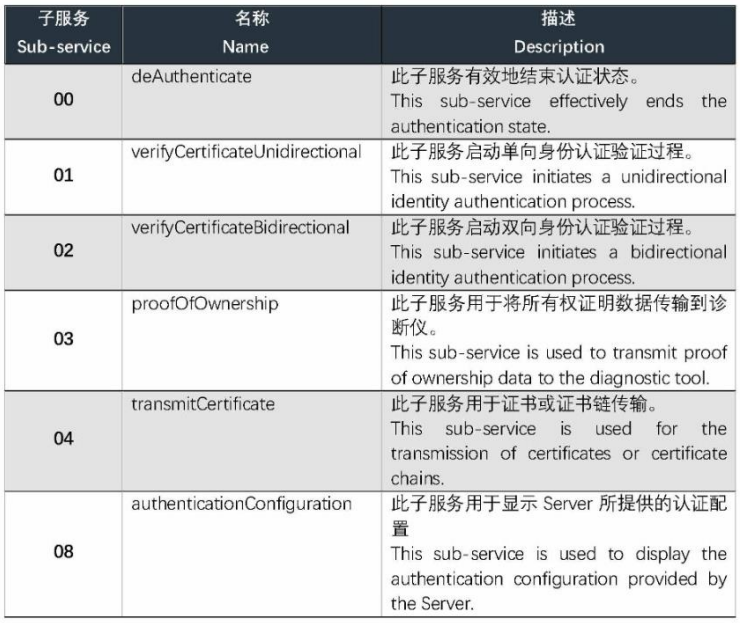
Implement certificate transmission, signature, signature verification, etc. based on various sub-services in the 0x29 service to authenticate and confirm the client's identity, ensure the security of the diagnostic interface, and prevent the client from accessing sensitive data without authorization.
2 ZC.XUANWU CYBERSECURITY INTRODUCTION
SecureUpdate
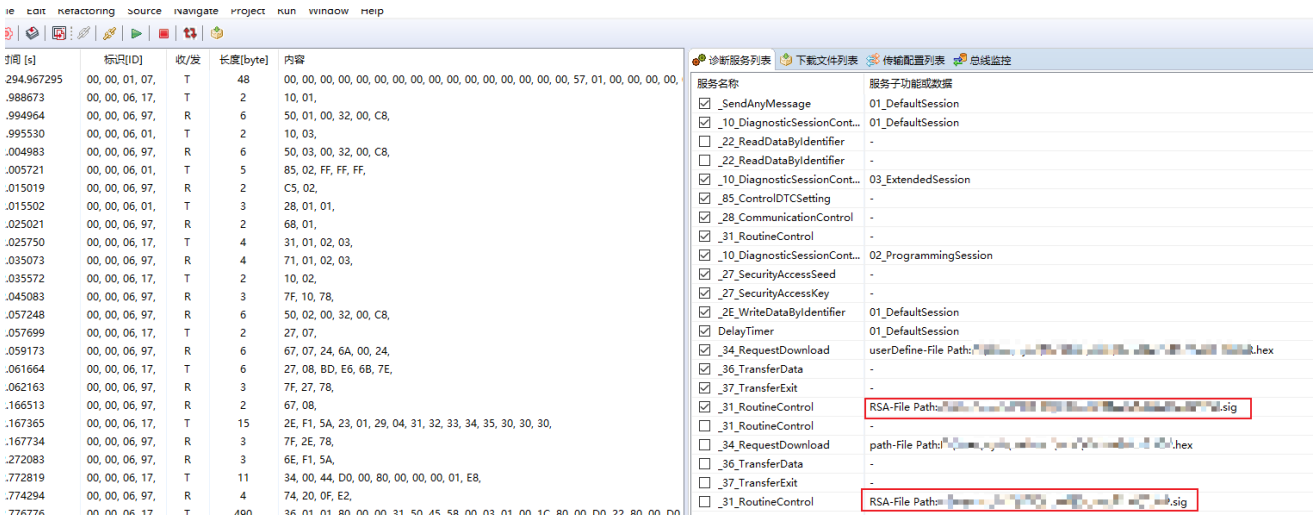
Xuanwu enables users to send single or multiple diagnostic messages to the ECU. For security upgrades, Xuanwu supports configuration when creating a new UDS 0x31 service. Users can choose signature algorithms, such as asymmetric encryption algorithms like RSA and symmetric encryption algorithms like SHA, to verify the authenticity of the code by signing FLASH files based on different algorithms.
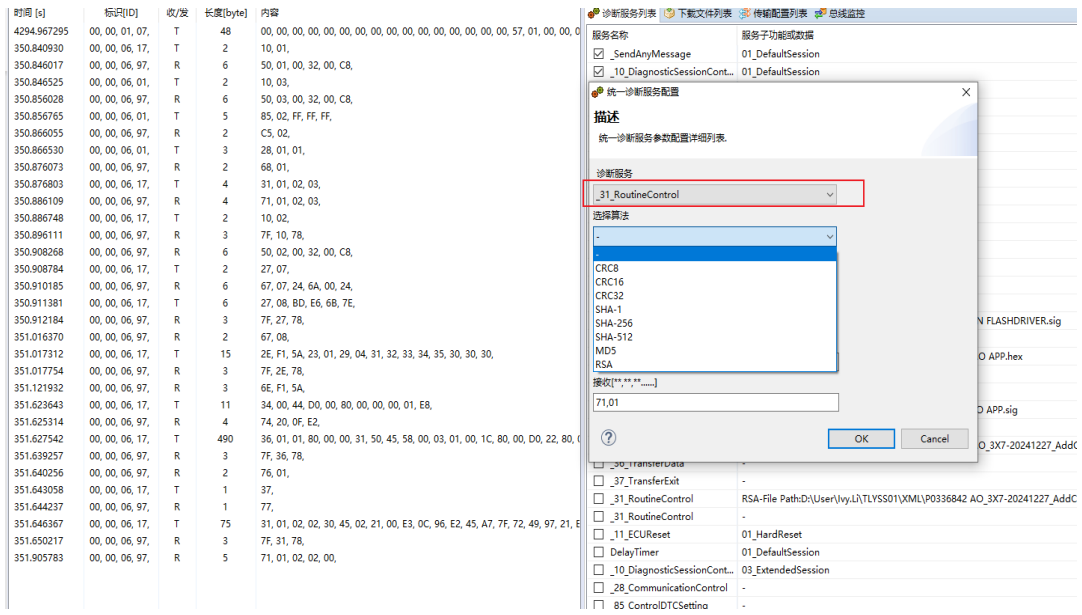
Xuanwu also supports manual selection of.rsa /.sig signed files for transmission and verification:
SecureDiagnostic
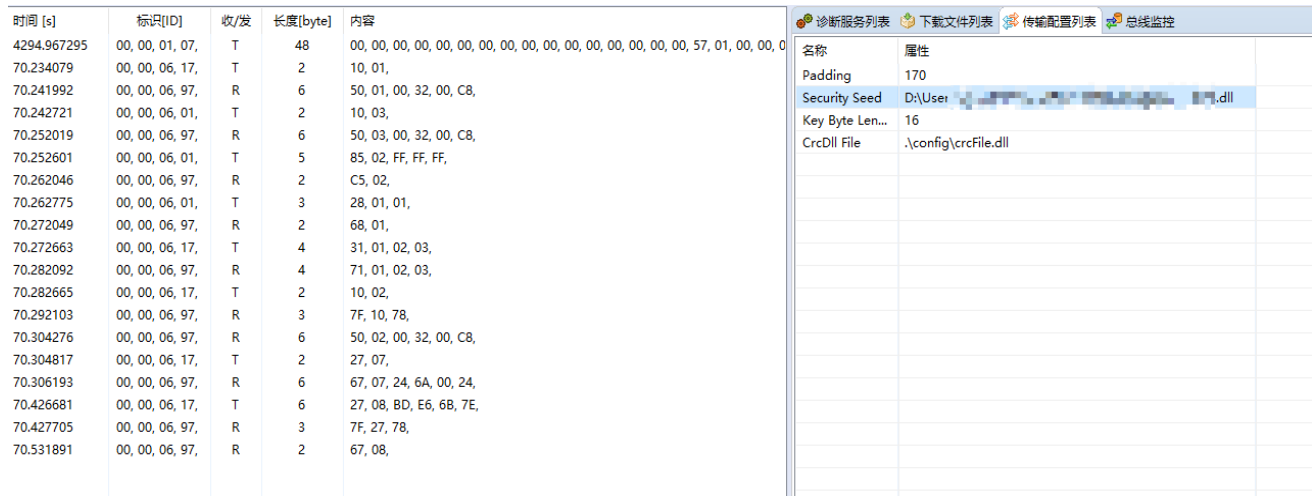
For the 0x27 service, Xuanwu can configure the Dll path and call the Dll to implement multiple algorithms to calculate the key value. It supports multiple algorithms, such as: AES-CBC/AES-CMAC algorithm, RSA algorithm, and HASH algorithm.
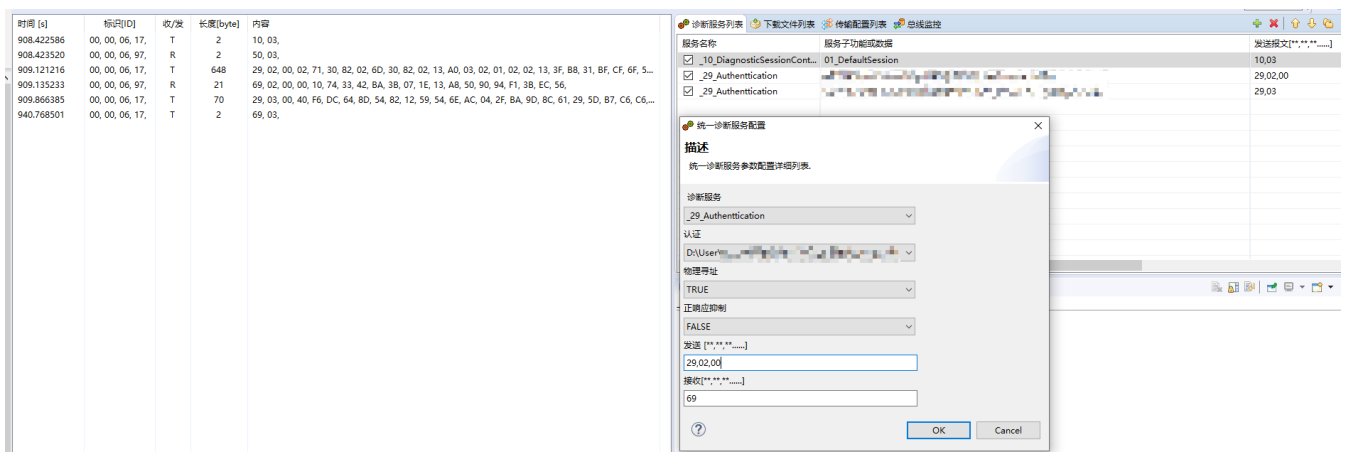
For the 0x29 service, Xuanwu supports multiple functions such as certificate transmission, signature verification, and signature for the 29 service. One-way or two-way authentication of the ECU can be achieved through services like 29 01/02. The above function can be achieved simply by configuring the certificate file to be passed when adding the 29 01/02 service and configuring the private key certificate file used for signing when adding the 29 03 service.
ZC.XuanWu upper computer software is used to download application programs and data from the PC to the electronic controller. It supports UDS on CAN, UDS on Eth, UDS on K-Line, and UDS on LIN protocols. It offers customized integration of customer-specific protocols and is widely used in the development, testing, and after-sales service stages of electronic controller products.
ZC.XuanWu program refresh and diagnostic testing tools can be applied in various application scenarios for OEMs and Tier 1 suppliers. Users can conveniently perform program flashing work in laboratories, test vehicles, and actual vehicles.
ZC.XuanWu upper computer software is currently used for program flashing of various electronic controllers:
Ø Body Control Module (BCM)
Ø Air Conditioning Controller
Ø DC/DC Converter
Ø Electric Power Steering Controller
Ø Engine Management System (EMS)
Ø Transmission Control Module (TCM)
Ø Battery Management System (BMS)
Ø Vehicle Control Unit (VCU)
Ø Motor Control Unit (MCU)
Ø Electric Power Steering System (EPS)
Ø Anti-lock Braking System (ABS)
Ø Electronic Stability Program (ESP)
Ø Active Collision Avoidance System (ACC)
Ø Traction Control System (TCS)
Ø Advanced Driver Assistance Systems Controller


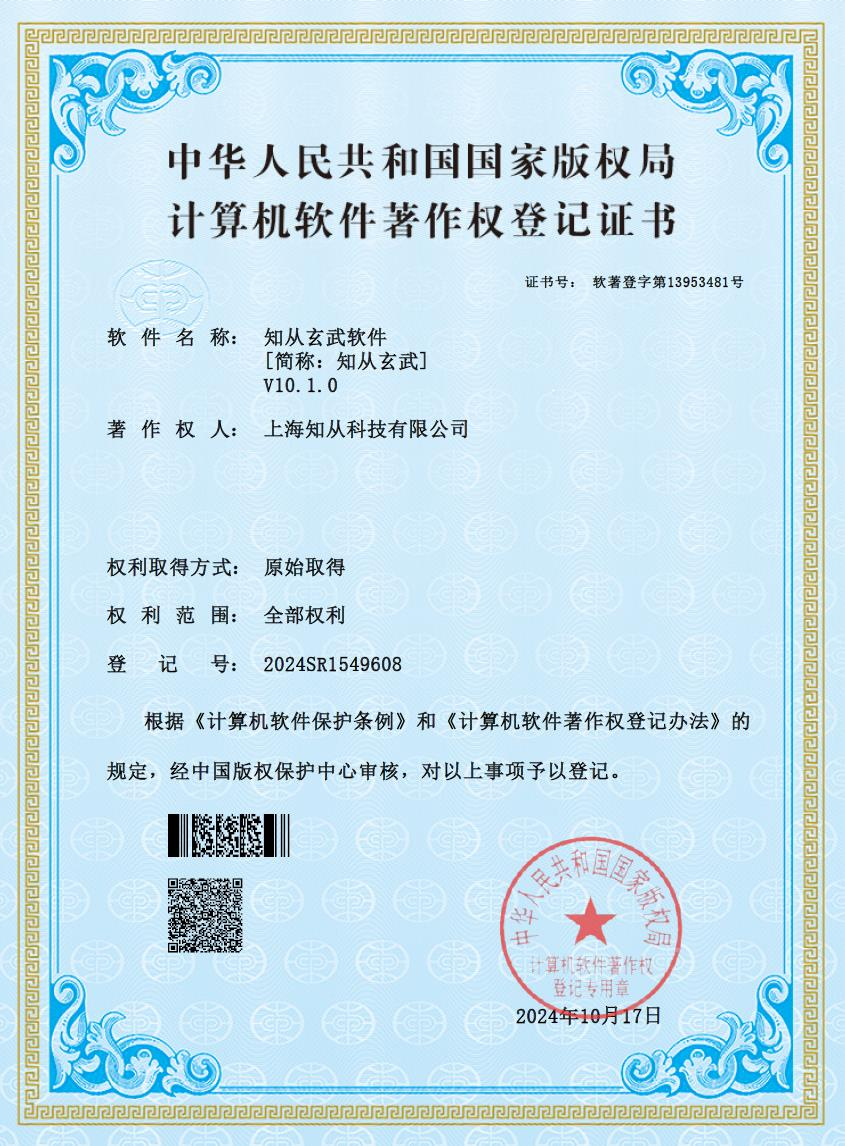
XUANWU SOFTWARE COPYRIGHT REGISTRATION CERTIFICAT
Click to download the product manual