- ZC.QingLong Secureboot Based On Infineon TC2XX
- ZC.QingLong SPI OTA Product Manual Based On Infineon TC397
- ZC.QingLong SecureBoot Product Manual Based on NXP S32K3 For CHERY QSQR
- ZC.QingLong BootLoader Product Manual Based on NXP S32K3
- ZC.QingLong FOTA Solution
- ZC.QingLong BootLoader
- ZC.QingLong BootLoader Product Manual Based on NXP KW45
- ZC.QingLong SecureBoot Product Manual Based on Infineon TC377
- ZC.QingLong FOTA Product Manual Based on Infineon TC387
- Introduction to ZC.QingLong Ethernet Flashing Based on RH850U2A
- ZC.Qinglong Ethernet BootLoader Product Manual Based on RENESAS RH850U2A
- ZC.QingLong SecureBoot Product for NXP S32K344
- ZC.QINGLONG FOTA PRODUCT MANUAL BASED ON INFINEON TLE9893
- ZC.QINGLONG SECUREBOOT PRODUCT MANUAL BASED ON INFINEON TC2XX FOR FAW-VW
- ZC.QINGLONG YUNTU YTM32B1HA0X SECUREBOOT INTRODUCTION
- ZC.QINGLONG UART BOOTLOADER PRODUCT MANUAL BASED ON TMS570
- ZC.QINGLONG PIPELINE PROGRAM SOLUTION INTRODUCTION
- ZC.QingLong BootLoader Based on Infineon TC213 SMTC
- ZC.QingLong BootLoader Product Manual Based on STSPC58NN for GEELY GEEA2.0
- ZC.Qinglong Bootloader Product Manual Based On NXP NCJ29D5
- ZC.QingLong FOTA Product Manual Based on Infineon TC3xx
- ZC.QingLong FOTA
- ZC.QingLong Secureboot Based on NXP S32K1XX
ZC.QingLong BootLoader is a program flashing software (BootLoader) independently developed by ZC Technology. For controllers using the ZC.QingLong BootLoader, the update function of application programs can be achieved through communication methods such as CAN, LIN, SPI, UART, and Uart. The ZC.QingLong BootLoader already supports chips from multiple manufacturers including NXP, Infineon, Renesas, ST and TI. Moreover, it is compatible with the program flashing specifications of multiple vehicle manufacturers and can provide customized development services.
Building upon the ZC.QingLong BootLoader, the QingLong UART BootLoader is based on the TMS570 platform. It implements UART flashing functionality by integrating the UART serial communication protocol. The controller can execute data flashing via UART communication and supports forced flashing capabilities, thereby enhancing the efficiency and security of program updates.
Communication Sequence
The Master side of the external device and the Slave side of the car, through the specific pin level, custom commands to achieve the process of brushing and writing, to achieve the Uart OTA function.
UART communication employs CRC8 checksum verification. The CRC (FCS) for each frame is located at the end of the frame. The verification scope includes the start byte, data length, function ID, and all data fields (excluding the FCS). The sender calculates the CRC and fills it into the FCS field. The receiver recalculates the CRC and compares it with the FCS. If they do not match, the verification is deemed failed, and the frame is discarded. CRC is used to detect transmission errors and enhance communication reliability.
The process of establishing communication between the Master side of the external device and the Slave side of the car is shown in the following figure.
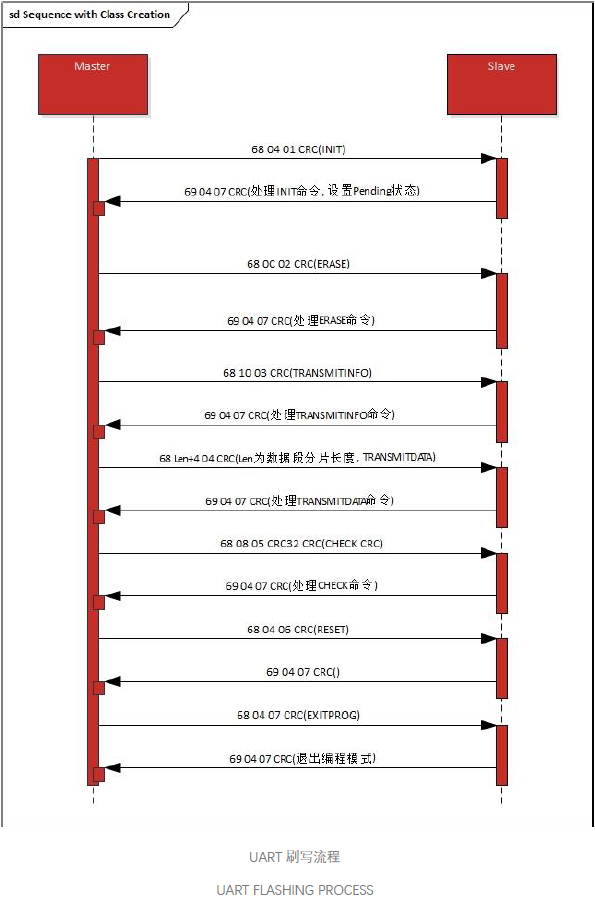
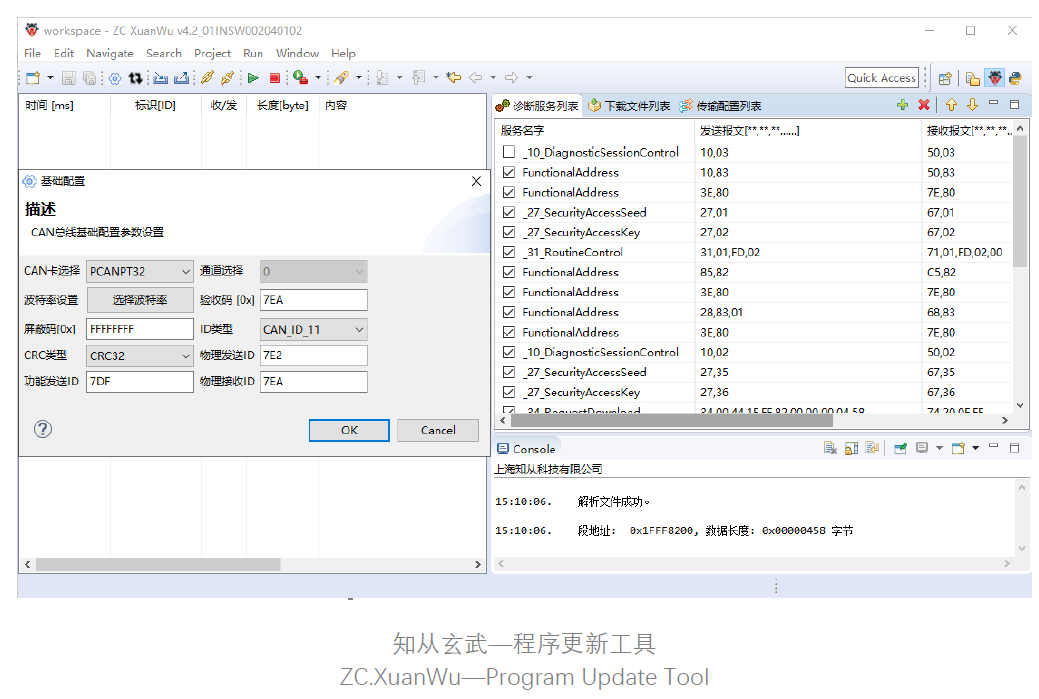
ZC.Xuanwu Programming Sequence
The ZC.Xuanwu Flashing Tool already supports the Uart serial communication protocol Uart brushing function. Before using the ZC.Xuanwu Flashing Tool for flashing, it is necessary to configure the communication interface type, communication IP address, port number, source address (SA), destination address (TA), etc.
Before performing the flashing operation, you need to import a preset XML file to load the flashing process corresponding to the OEM's flashing specifications, or configure the flashing process services by yourself.
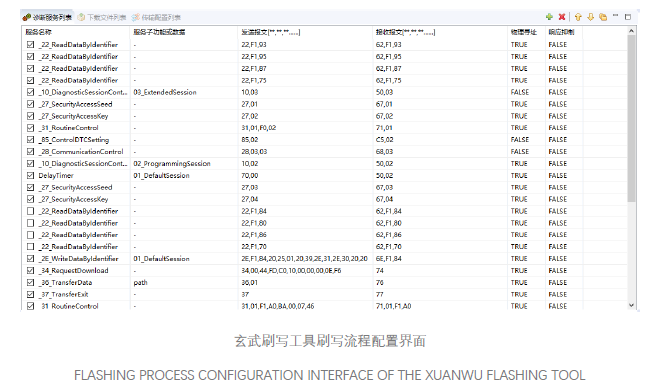
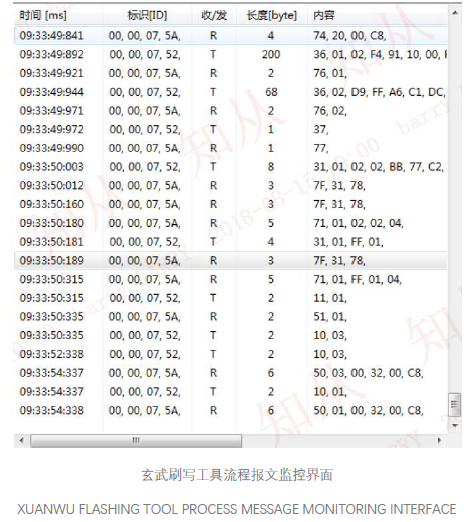
After the flashing process starts, users can observe the flashing progress and any errors that occur during the flashing process through the process message monitoring interface.
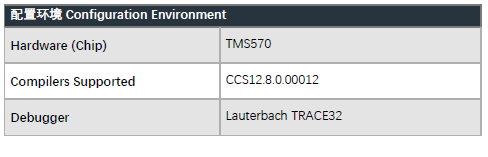
The ZC.Qinglong Uart BootLoader can be applied to the program flashing function of controllers using the TMS570 series of chips. The supported controllers include:
Ø Body Systems Vehicle
Domain controllers, zone controllers, gateways, etc.
Ø Power Systems
Battery management systems, etc
Ø Chassis Systems
Electric power steering systems, anti-lock braking systems, electronic stability systems, etc
Intelligent and connected vehicles are the future direction of the automotive industry. The rapid development of smart cars has changed the value of cars. With the rise of user experience needs, system software has become increasingly important, and the trend of software-defined vehicles has become irreversible.
The core idea of Software Defined Vehicles (SDV) is that the future of cars will be determined by software technology centered on artificial intelligence, rather than the size of the car's horsepower, whether it has genuine leather seats, or the quality of its mechanical performance. This will become a common development trend in the automotive industry. The industrial structure of the automotive industry is following the development path of the computer and mobile phone industries, and the standard for measuring the quality of cars will shift from the "hardware" level to the level of intelligence and the quality of software services.
In the process of automotive intelligence development, although the importance and proportion of software continue to increase, the research and development cycle of the whole vehicle is invisibly shortened, so the risk of car recalls caused by software vulnerabilities continues to rise. At present, the total code amount of high-end cars has exceeded 100 million lines. Even if controlled according to the highest software standard of CMMI (Capability Maturity Model Integration) level 5, the code defect rate is still 0.32‰, and the scale of potential problems is not to be underestimated. Recall events require car manufacturers to pay huge direct and indirect costs.
UART, as a fundamental serial communication method, continues to hold a significant place in the automotive electronics field. Its core value lies in its extremely simple hardware connection, requiring only three cables for transmission (Tx), reception (Rx), and ground (GND) to achieve full-duplex asynchronous communication, without the need for complex clock synchronization signals. This simplified physical structure offers significant advantages of high reliability and low cost, making it particularly suitable for low-speed, point-to-point data exchange between cost-sensitive and space-constrained Electronic Control Units (ECUs) within the automotive interior, or between ECUs and simple sensors/actuators. Although modern in-vehicle network technologies are evolving towards high-speed buses like CAN FD, FlexRay, and even Automotive Ethernet, UART remains an ideal choice for specific automotive application scenarios due to its simple protocol and very low hardware/software implementation costs .
Within the development, production, and even the overall vehicle network architecture of automotive electronic systems, UART plays several key roles. During the development and production stages, UART interfaces are often reserved as channels for diagnostics and firmware programming (ISP). Engineers can use them to output low-level debug logs, enabling the most direct "dialogue" with the ECU . In In-Vehicle Infotainment (IVI) systems, peripheral modules such as T-Boxes (Telematics Boxes) or autonomous driving domain controllers often exchange simple control commands and status data with the host system via UART . Furthermore, facing the trend towards domain control and zonal architectures in automotive E/E architecture, UART technology continues to evolve. For instance, to reduce system complexity and cost, new architectures like "MCU-Less" have emerged in the industry. Under such architectures, innovative technologies like "UART over CAN" have been derived. This allows domain controllers to utilize the CAN bus physical layer to transmit UART-based instruction packets, enabling direct control of remote simple devices and eliminating the need for separate microcontrollers at those nodes, achieving cost reduction and efficiency improvement .
Ø Uses UART Serial Communication Protocol for data transmission
Ø Adaptable to the program update specifications of various car manufacturers.
Ø Supports multiple encryption mechanisms to ensure the security and reliability of data.
Ø Offers update capabilities for both applications and data.
Ø Features safe and stable upgrade processes with mechanisms such as breakpoint resumption, intelligent restoration, and traceability.
Ø Supports full package upgrades for enhanced security.
Ø Compatible with ZC.Xuanwu program update tools, providing a comprehensive solution for program updates.
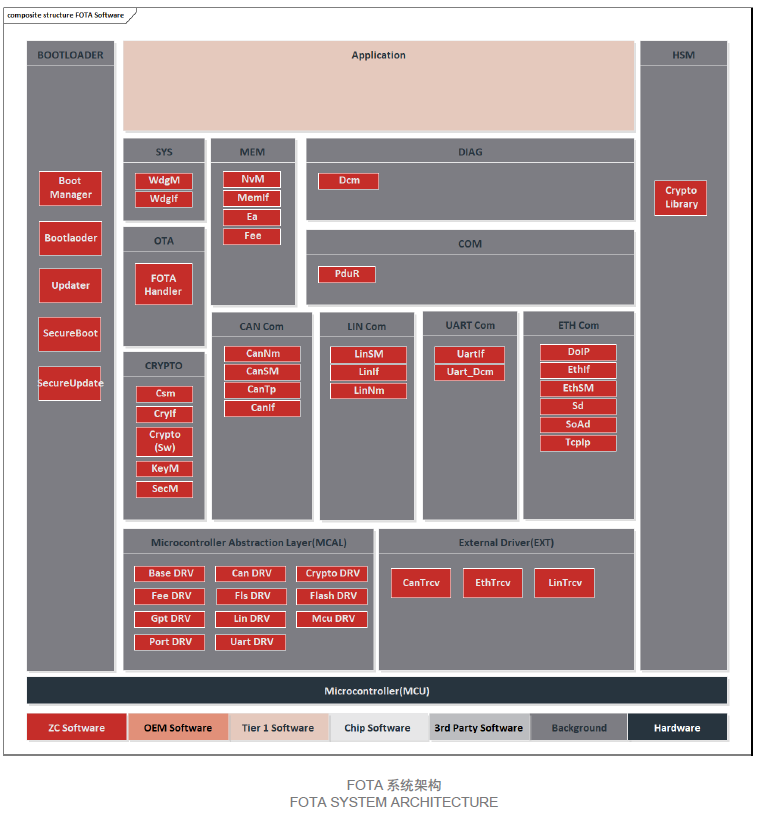
The Qinglong Uart BootLoader system architecture supports the FOTA function in Uart communication scenarios. It realizes the UART Serial Communication Flashing through the UartIf, Uart_Dcm modules, and meets the Cybersecurity requirements of various OEM specifications by adapting to the Crypto Library. The following are the function descriptions of each module:
Ø Bootloader
The BootManager module provides FOTA startup management functions and supports the adaptation of hardware and software SecureBoot functions. It stores the expected MAC values of the Bootloader and Application through programming and flashing. During the startup phase, SecureBoot performs software integrity verification by calculating and comparing the MACs of the Bootloader and Application to ensure software security requirements.
Ø Uart Com
Use Uart serial communication protocol to transfer data. Brush-write process through specific pin levels, custom commands to implement Uart OTA function.
Click to download the product manual